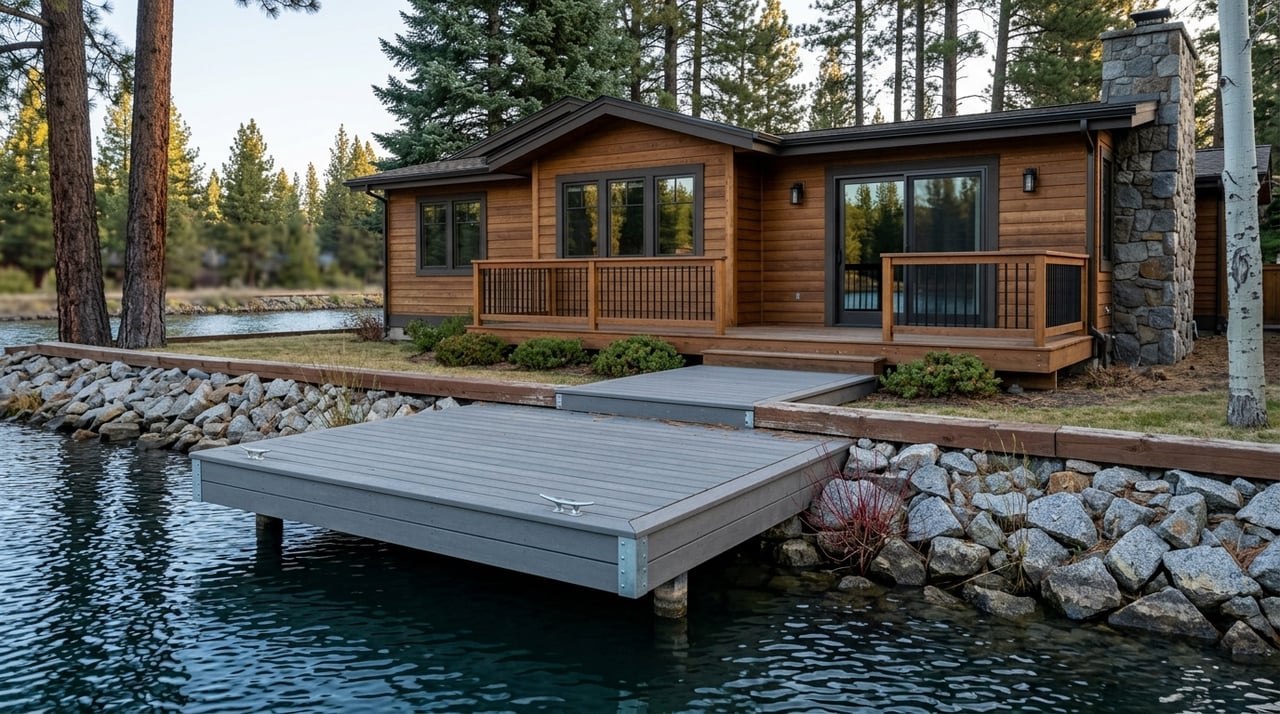
If you picture Tahoe living with your boat just steps from home, Tahoe Keys probably rises to the top of your list. That appeal is real, but buying here is more nuanced than simply choosing a waterfront address. If you want boating convenience that matches your lifestyle and long-term plans, this guide will help you understand what to verify before you buy. Let’s dive in.
Why Tahoe Keys Appeals to Boat Owners
Tahoe Keys is a 740-acre private marina community on the south shore of Lake Tahoe in South Lake Tahoe. According to the Tahoe Keys Property Owners Association, the community includes about 1,528 property owners, with roughly 1,193 single-family homes and 335 townhomes.
For many buyers, the draw is simple: direct or near-direct boating access paired with a residential setting. But Tahoe Keys is not a standard subdivision. The TKPOA manages common areas, water service, security patrol, and CC&Rs, along with amenities such as beaches, pools, tennis courts, and parks, which means your boating experience is tied not just to the home, but also to the association structure.
Know That Boating Access Is Parcel-Specific
One of the most important things to understand is that not every Tahoe Keys property offers the same boating setup. The TKPOA channel and amenities overview makes clear that dock rights, launch privileges, and membership benefits can vary by subdivision and association.
That matters because two homes with similar price points may offer very different on-water convenience. One property may include a private dock, while another may rely on a shared arrangement or a separate membership structure. If boating is central to how you plan to use the property, this should be one of your first due diligence items.
Compare Single-Family and Townhome Access
In broad terms, Tahoe Keys properties often fall into a few different boating-access patterns. The TKPOA states that most homes have either a private boat dock or a shared community dock, while townhouse units have assigned boat slips in private Cove docks.
Townhome buyers should pay attention to operational details as well. TKPOA notes that all boats docked at a townhouse dock require a TKPOA boat sticker, which is a small but important example of how ownership and use are governed here.
Before you make an offer, it helps to ask exactly which category a property falls into and what that means for your specific boat. A home that works well for one owner may not work the same way for another if your vessel size, launch habits, or seasonal use differ.
Understand Channels, Lagoons, and Lake Access
Tahoe Keys boating is built around a connected water system. The TKPOA channels page explains that homeowners have open access either through Tahoe Keys Marina or through lagoons and canals that connect to the West Channel, while the East and West channels provide boating access to Lake Tahoe.
This system is part of what gives the community its appeal. At the same time, the West Channel and lagoon system are privately owned and governed by the TKPOA Board, which reinforces why buyers should think beyond the lot line. In Tahoe Keys, your boating lifestyle depends on both the property and the larger infrastructure supporting it.
Verify Slip Size Before You Buy
If you already own a boat, size compatibility should be checked early. The Tahoe Keys Boat Harbor Association says it operates 266 secured slips on East Cove docks, with published slip sizes of 20, 28, and 30 feet and maximum overall boat lengths of 25, 30, and 32 feet.
That overall length standard is especially important because it includes items like anchors, swim platforms, rudders, and similar extensions. In practice, a boat marketed at one length may functionally exceed slip limits once those components are included.
Here are a few details worth confirming before closing:
- Exact slip dimensions
- Maximum allowed overall boat length
- Any beam or clearance restrictions
- Whether your current boat fits as configured
- Whether a future boat upgrade would still work
Do Not Assume a Slip Transfers
This is where many buyers can get tripped up. The TKBHA notes that boat-slip licenses are typically bought and sold privately, and membership is limited to specific qualifying parcels.
In plain terms, a Tahoe Keys address does not automatically mean a transferable dock license comes with the property. You need to verify exactly what conveys, how it is documented, and whether the transfer is legally recognized.
The most useful framework comes from the TKBHA buyer due diligence guidance. Key questions include:
- What exactly conveys with the property?
- Is the slip or mooring legally documented and transferable?
- What are the boat length and beam limits?
- Does the setup align with your plan for launching, dry storage, or future lifts and buoys?
Check Launch Privileges Carefully
Launch access is another detail that can vary more than buyers expect. The TKPOA says residents may launch through Tahoe Keys Marina, while the TKBHA says its members launch without charge at the marina.
That distinction matters because not every property owner has the same rights under the same terms. If easy launching is part of your plan, ask for the governing documents and written confirmation of the specific privileges tied to the parcel you are buying.
Factor in Marina Services
For many boat owners, convenience is not just about docking. It is also about service, storage, and support. California State Parks lists Tahoe Keys Marina as a public marina, launch, and dry-storage facility in South Lake Tahoe, with amenities that include fuel sales, haul-out and repair, launching valet services, pumpout, showers, restaurants, transient berths, and boat rentals.
That broader marina ecosystem can be a major plus if you want flexibility. Whether you own a boat now or are planning future use, access to launch and service infrastructure can shape how practical your ownership experience feels from season to season.
Ask About Seasonal Use
Not every dock arrangement is designed for year-round use. The TKBHA says its facilities are weather-permitting and typically open from April 1 to October 31.
If you expect winter access or shoulder-season boating, this deserves a direct conversation before you buy. A property that supports your summer plans may not align with your expectations for off-season use, and it is better to know that upfront.
Look at the HOA as Boating Infrastructure
In Tahoe Keys, the HOA is not just an administrative layer. It is part of the ownership experience on the water. The TKPOA maintains the 11-mile lagoon system, provides water and security patrol, and operates with year-round staff that increases in summer.
That is why reviewing association rules, operations, and access procedures matters. TKPOA also states that new owners may need to handle member ID passes, parking permits, and boat registrations through the Pavilion front desk, which gives you a sense of how day-to-day access is managed.
As a homeowner, you also gain access to private-use amenities for owners and guests. According to the TKPOA main site, these include private beaches, an indoor 25-meter pool, an outdoor pool, pickleball, tennis, a pavilion, and a pier, with some amenities requiring a homeowner access card.
Understand Weed Management and Water Conditions
Boat owners should also be aware of the water-management side of Tahoe Keys living. The TKPOA reports that aquatic weeds cover more than 90 percent of the 172-acre lagoon system and says it is actively working on management efforts with TRPA and Lahontan.
That does not mean Tahoe Keys stops being a boating community. It does mean channel condition and maintenance work can affect how the waterfront feels and functions over time. If you are comparing properties, it is worth thinking about boating access as an active, managed system rather than a static feature.
There are also operating practices intended to help protect the lake. The boat back-up station program asks boats to stop and reverse about 10 feet before leaving the West Channel to help reduce the spread of aquatic invasive plants.
Learn the Tahoe Boating Rules
Owning in Tahoe Keys means you are also operating within Lake Tahoe’s broader regulatory environment. The Tahoe Regional Planning Agency says all motorized watercraft require inspection before launching into Lake Tahoe, Fallen Leaf Lake, or Echo Lake, and watercraft must be launched from a managed boat ramp or marina after inspection.
TRPA also enforces a 600-foot no-wake zone around Lake Tahoe, with buffers around swimmers, paddlers, and shoreline structures. The agency also provides the Tahoe Boating app with no-wake maps and marina and ramp information, which can be useful if you are new to boating on the lake.
There is another statewide requirement to know. California State Parks says that effective January 1, 2025, all operators of motorized vessels on California waterways must carry a California Boater Card.
Think Carefully About Future Moorings
Some buyers focus on the property as it exists today. Others also want to know what can be added later. If you are thinking about a future buoy, lift, or other mooring arrangement, you should know that these additions are regulated and not automatic.
According to TRPA mooring registration guidance, all moorings with access to Lake Tahoe must pay annual registration fees, existing buoys must be authorized by permit or removed, and registration stays with the property when ownership changes. TRPA also notes that new moorings require eligibility review and, in many cases, a lottery process.
For HOA parcels, BMP compliance and frontage rules may also matter. The practical takeaway is simple: if future water access improvements are part of your purchase logic, verify feasibility before you rely on that plan.
Your Tahoe Keys Buying Checklist
If boating is one of your top priorities, keep your due diligence focused on the exact property, not just the neighborhood name.
Use this checklist as a starting point:
- Confirm whether the property has a private dock, shared dock, assigned slip, or separate membership structure
- Verify what rights and access items legally convey with the sale
- Review slip size, overall boat length limits, and any beam restrictions
- Confirm launch privileges and whether any fees or membership terms apply
- Ask whether dock or slip use is seasonal or weather-dependent
- Review HOA documents, registration procedures, and access requirements
- Understand current marina support options such as fuel, repair, dry storage, and valet launch
- Check whether future mooring or lift plans are realistic under TRPA rules
A Tahoe Keys purchase can be an exceptional fit if the boating setup matches how you actually plan to use the property. That is where local guidance matters most, especially in a neighborhood where water access can vary from one parcel to the next.
If you are weighing homes in Tahoe Keys and want help evaluating the boating side of the purchase as carefully as the real estate side, connect with Ryan Smith. You will get local insight, clear guidance, and a practical view of how a property fits both your Tahoe lifestyle and your long-term goals.
FAQs
What should boat owners verify before buying in Tahoe Keys?
- You should verify what water access rights convey with the property, whether a dock or slip is legally documented and transferable, the allowed boat size, launch privileges, and any seasonal or association-based restrictions.
Do all Tahoe Keys homes include a transferable boat slip?
- No. According to TKBHA, boat-slip licenses are often bought and sold privately, and membership is limited to qualifying parcels, so a Tahoe Keys address does not automatically include a transferable slip.
Are Tahoe Keys townhomes set up differently for boating access?
- Yes. TKPOA says townhouse units have assigned boat slips in private Cove docks, and boats docked at a townhouse dock require a TKPOA boat sticker.
Can you launch a boat from Tahoe Keys into Lake Tahoe?
- Yes, but access and privileges can vary. TKPOA says residents may launch through Tahoe Keys Marina, and all motorized watercraft must also meet TRPA inspection and managed launch requirements before entering Lake Tahoe.
Are Tahoe Keys boat docks open year-round?
- Not always. TKBHA says its facilities are weather-permitting and typically operate from April 1 to October 31, so you should confirm the specific seasonal use rules tied to the property you are considering.
What boating rules apply after buying in Tahoe Keys?
- You need to follow TRPA inspection and launch rules for motorized watercraft, observe Lake Tahoe no-wake requirements, and, starting January 1, 2025, carry a California Boater Card if you operate a motorized vessel on California waterways.
Can a Tahoe Keys buyer add a new buoy or mooring later?
- Not automatically. TRPA says new moorings require eligibility review and may involve a lottery process, and existing moorings must meet registration and permit requirements that stay tied to the property.