A few hundred feet of elevation can change your entire Tahoe winter. In North Upper Truckee, two homes on the same street can see very different snow, sunlight, and daily routines. If you are buying a second home or relocating to the South Lake Tahoe area, understanding how elevation and exposure work here will help you choose the right property and plan your season with confidence. In this guide, you will learn how elevation, aspect, and driveway design affect snow, sun, access, and maintenance in North Upper Truckee. Let’s dive in.
Elevation basics in North Upper Truckee
North Upper Truckee sits in El Dorado County within the South Lake Tahoe basin. The city center is roughly 6,200 to 6,300 feet above sea level, and nearby parcels in North Upper Truckee vary by several hundred feet. That small change matters for temperature and how long snow sticks around.
Local microclimates form quickly here. Aspect, slope, tree canopy, and proximity to open areas all influence how storms land on your lot. Two neighboring homes can experience very different conditions from the same storm.
How elevation changes snow
Ambient air cools with height at a typical rate of about 3.5 degrees Fahrenheit per 1,000 feet. In practice, a few hundred feet can turn a rain event into snow. It can also mean more total accumulation and a longer snow season at higher parcels.
Higher lots usually hold snow later into spring. Lower parcels closer to lake level tend to see more freeze-thaw cycles and earlier melt. Wind and terrain also matter. Ridges and leeward slopes collect deeper drifts, while sheltered north-facing slopes keep snow the longest.
Year to year, Sierra snowpack is variable. Warm storms and rain-on-snow can reduce lower-elevation snow quickly. Long-term monitoring points to greater variability and earlier runoff, so plan for wide swings by winter.
Aspect and sun exposure
South and southwest exposures receive the most direct winter sun. That sunlight speeds up driveway and roof melt, and can boost passive solar heat inside when a home is designed for it. For many buyers, this makes daily life easier during storm cycles.
North-facing exposures receive less direct sun. Snow and ice linger longer, which raises heating demand and increases snow and ice maintenance. Tree cover can amplify this effect. A dense canopy can make even a south-facing lot behave more like a north-facing one in terms of shade and snow retention.
Good orientation helps, but cold nights at altitude are a constant. A well-insulated, airtight building envelope performs better across all exposures and reduces the risk of ice-related issues.
Driveway and access
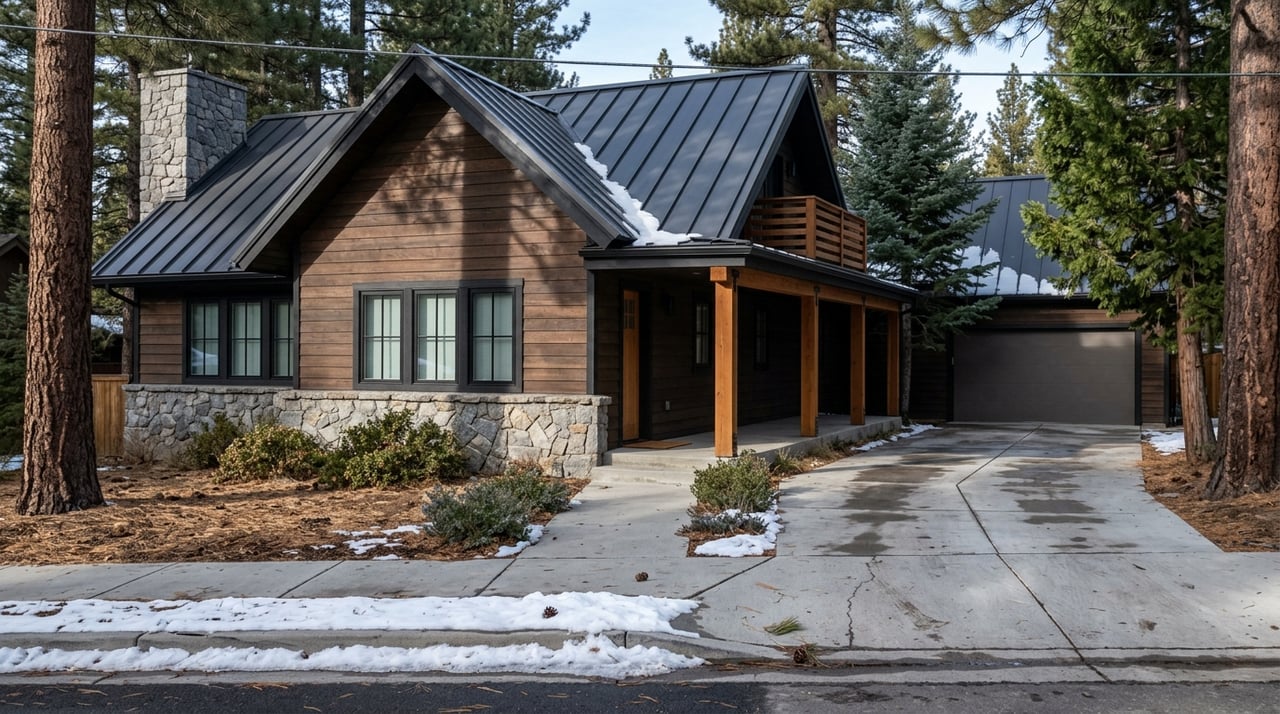
Driveway grade drives daily winter usability. Steep drives are common on hillside parcels, but they require more plowing, careful traction management, and sometimes heated segments or surface treatments. Many agencies and contractors advise keeping grades below roughly 12 to 15 percent for safety and serviceability. Always confirm local standards before designing or modifying a driveway.
Plan where your plowed snow will go. Snow storage should not block sightlines, drainage, or public rights of way. Best management practices and local rules around impervious surfaces and runoff in the Tahoe Basin can limit where and how you store snow.
County plows maintain public roads during storms. Private driveways are the owner’s responsibility. Contracted plowing and professional roof clearing are common. Service availability can depend on driveway slope, width, and turnaround space, so evaluate winter access before you buy.
Building performance and winter durability
Roof structure and slope matter at Tahoe elevations. Snow load requirements in this basin are higher than at lower elevations in California. Roof forms that shed snow onto decks, walkways, or parking need engineered solutions or snow guards to protect people and property.
Freeze-thaw cycles create ice dams when warm roofs melt snow that refreezes at the eaves. Proper attic insulation and ventilation, smart roof details, and heat tape in specific locations can help manage this risk. Exterior materials also take a beating in winter. Choose frost-resistant surfaces for driveways and steps, and protect any exposed plumbing.
Trees are part of the Tahoe experience, but heavy snow can bring down limbs. Evaluate canopy health and clearance around structures and access points. In spring, direct meltwater away from the foundation and walkways, using approved infiltration or conveyance features where required.
Seasonal game plan
A simple maintenance calendar makes winter living smoother. Expect timing to shift by year, but the rhythm stays similar.
Pre-winter: late summer to fall
- Clear gutters, verify roof flashing, and air-seal and insulate the attic.
- Service heating systems and test backup equipment.
- Evaluate trees for limb risk and trim as needed.
- Confirm snow-removal contracts, driveway access, turnaround space, and snow-storage locations.
Winter: roughly November to March
- Manage plowing and shoveling, and keep paths and vents clear.
- Monitor roof snow loads and perform selective roof clearing when needed.
- Watch for ice dams and maintain safe egress.
- Replenish de-icing materials and follow approved practices for the Tahoe Basin.
Spring: during melt
- Inspect for water intrusion and check foundations, grading, and drainage.
- Clear meltwater channels and repair any surface damage from freeze-thaw.
- Reassess landscaping and hardscaping for durability improvements.
Summer: projects window
- Complete repairs, service HVAC, and plan grading or driveway improvements.
- Handle any permitting during the easier weather window.
Cost and lifestyle tradeoffs
Every parcel balances convenience and character. Higher elevation and north-facing exposure typically bring more snow, a longer maintenance season, and greater structural and operational demands. In return, you often gain a quieter, more alpine feel with potential for bigger views and privacy.
Lower elevation and south-facing exposure reduce persistent snow and ease daily access. You often get faster melt on driveways and roofs and better winter daylight. The tradeoff can be different views or more activity nearby, depending on location.
Budget for both ongoing and periodic needs:
- Ongoing: snow removal, occasional professional roof clearing, added heating costs, and tree work.
- Periodic: driveway regrading or paving, heated driveway or roof systems, structural roof upgrades, and drainage or retaining solutions.
Obtain multiple local quotes for snow removal and roof services. Ask recent sellers or neighbors about winter access. Estimate annual recurring costs before you purchase.
Buyer checklist for North Upper Truckee
A structured review helps you compare properties on more than finishes and views.
Lot and home essentials
- Confirm parcel elevation, aspect, slope angle, and canopy coverage.
- Request a winter site visit or current winter photos to see actual conditions.
- Verify roof pitch, snow-load rating, and the presence of snow guards or heated gutters.
- Inspect drainage grading, foundation condition, stairs, decks, and walkways.
Services and logistics
- Identify local plowing and roof-clearing contractors and confirm they service your access type.
- Check emergency access and typical response during storms.
- Set up mail and package delivery that works in winter.
Regulatory and environmental
- Review local rules on lot coverage, driveway modifications, snow storage, and runoff control.
- Confirm defensible space and wildfire mitigation requirements.
Lifestyle fit
- Talk with neighbors about plow timing, snow storage habits, and road conditions during big storms.
- For second-home use, plan for shut-off valves, remote HVAC and leak monitoring, and a reliable snow plan during absences.
Plan with local rules in mind
Design and maintenance decisions in the Tahoe Basin often require approvals. Confirm snow-load design values for your specific location with local building departments. Verify driveway slope limits, sightline requirements, and ingress and egress standards before you remodel.
Understand how best management practices apply to your parcel, including impervious coverage limits and approved snow-storage and runoff controls. Public works departments manage road plowing priorities, while private drives remain your responsibility. Align your winter plan with these rules to avoid surprises.
The bottom line
In North Upper Truckee, elevation and exposure are not small details. They shape how storms land, how your driveway performs, how your home uses energy, and how your budget changes across the year. If you understand these factors, you can choose a property that matches your winter habits and plan your maintenance with less stress.
If you want help reading the terrain and planning your purchase, connect with Ryan Smith for hyper-local guidance tailored to how you live and invest in Tahoe.
FAQs
How does a few hundred feet of elevation affect snow in North Upper Truckee?
- A small rise can lower air temperature enough to turn rain into snow, increase accumulation, and keep snow on the ground longer into spring compared with parcels closer to lake level.
Which matters more in winter, elevation or aspect?
- Both matter. Higher elevation raises the odds of snowfall and retention, while south-facing exposure speeds melt and adds passive solar warmth. Tree canopy can shift results either way by adding shade.
What driveway slope is practical for winter access?
- Many agencies and contractors recommend keeping grades below roughly 12 to 15 percent for safer access and easier service, but you should verify exact local standards before building or modifying.
Who plows the roads and who handles my driveway?
- Public agencies plow main roads during storms. Private driveways and on-site areas are the owner’s responsibility and are usually handled by contracted services.
How do trees around the home affect winter living?
- Dense conifer canopy increases shading, which slows melt and keeps snow and ice longer. It can also raise limb-fall risk during heavy snow, so evaluate tree health and clearance.
What should second-home owners set up before winter?
- Line up a plow contract, confirm snow-storage locations, add remote HVAC and leak monitoring, and schedule pre-winter checks for roof, gutters, and insulation to manage ice and access through the season.