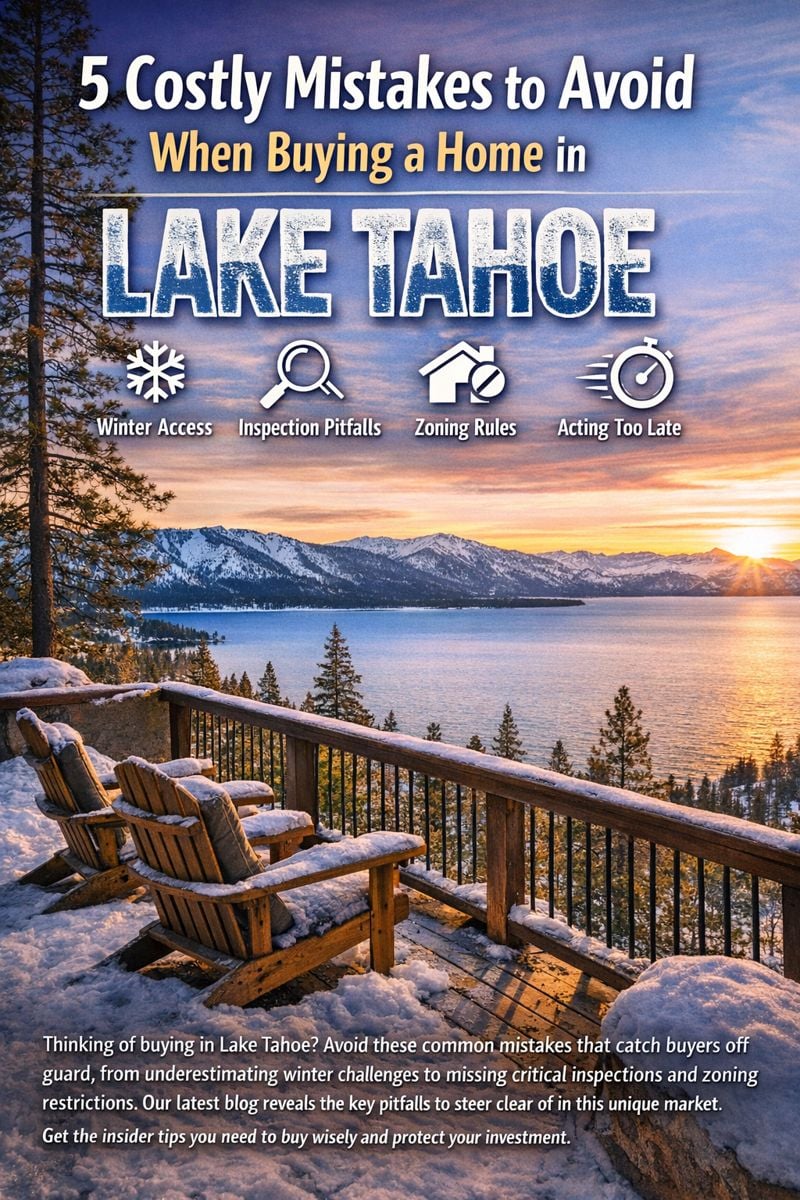
Big question: What mistakes should buyers avoid when purchasing a home in Lake Tahoe?
Short answer: Underestimating location nuance, skipping specialized due diligence, and assuming Tahoe works like other markets are among the most costly errors. Add in seasonal access challenges, zoning and rental rules, and you have a market that demands local insight.
Mistake #1: Treating Tahoe Like a Normal Market
Lake Tahoe isn’t a typical real estate market — it’s a seasonal resort community with micro‑neighborhoods that vary drastically even just a few minutes apart.
Here are a few examples of what buyers often overlook:
-
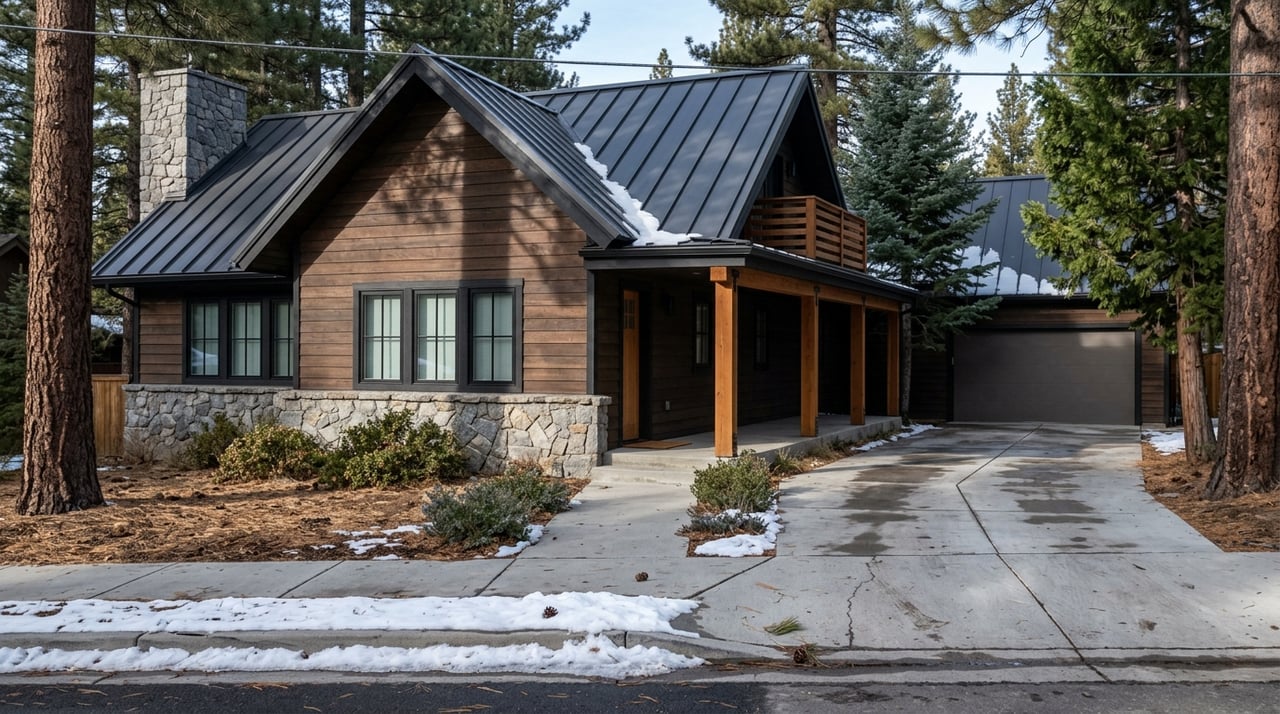
Winter access and snow management: Some properties are hard to reach after storms or sit on steep driveways that make snow removal expensive and time‑consuming.
-
Seasonal traffic and summer congestion: Roads can get busy in peak months, affecting everyday convenience.
-
Micro‑neighborhood differences: Tahoe has lakefront, mountain, forested, and ski‑area pockets where lifestyle and resale value differ significantly — even with the same price point.
Ignoring these nuances can lead to a great house in the wrong place for your lifestyle and usage.
Mistake #2: Ignoring Inspection Depth
Mountain homes require far more than a basic inspection — and many buyers underestimate this.
In Tahoe, you should insist on checking:
-
Roof, snow load capacity, drainage, and gutters — snow can turn a small problem into a major structural issue.
-
Decks, chimneys, and wood structures exposed to moisture and freeze‑thaw cycles.
-
Site access and grading — poor drainage or steep driveways can add thousands to maintenance.
-
Well and septic systems are less common in Tahoe homes.
Skipping a specialized, Tahoe‑savvy inspection is one of the fastest ways to encounter costly surprises down the road.
Mistake #3: Overvaluing Online Estimates
Online valuation tools (Zestimates, automated pricing models, etc.) are a starting point — but in Tahoe they often miss key factors that real buyers will care about:
-
Lot orientation and view quality on the lake or mountains
-
Winter usability (driveway grade, access)
-
Zoning restrictions or permit requirements
-
HOA rules, including short‑term rental allowances — especially important if you plan to rent your property.
These platforms can’t account for environment, weather impact, and regulatory nuances that matter here.
Mistake #4: Underestimating Zoning & Rental Rules
Tahoe spans two states (California and Nevada) and multiple counties, each with its own rules for zoning, permits, and even short‑term rentals. These differences can affect use, income potential, and compliance.
In South Lake Tahoe, for example:
-
Most residential zones have significant restrictions on short‑term rentals — and buying without checking this could derail your plans.
-
HOA rules may prohibit rentals entirely or require specific permits.
Knowing these ahead of time protects both your investment and lifestyle goals.
Mistake #5: Waiting Too Long to Act
Good Tahoe homes still move quickly, especially desirable lakefront, ski‑adjacent, or turnkey properties.
Buyers who hesitate often end up:
-
Chasing overpriced or less ideal alternatives
-
Competing against cash‑ready purchasers
-
Losing out to buyers with local agent access to off‑market deals
In a balanced market with increasing inventory but strong demand, timely action paired with local expertise often wins the deal.
Final Takeaway
The biggest mistakes in Tahoe come from assumptions — not bad intentions. This market rewards local knowledge, thorough inspections, and early preparation. The more you understand seasonal access, inspection depth, zoning, and neighborhood nuance, the better positioned you’ll be to make a confident purchase.
Ready to Buy with Confidence?
Before you write an offer, let’s pressure‑test the property together — including location, inspection insights, and long‑term use goals. It’ll save you time, money, and stress.